1. Emergence of Spirituality into Scientific Trauma Recovery Talks
Official records around PTSD and veterans’ trauma healing started citing spirituality and indigenous ways of healing warriors after war-time experience. So far, I have seen this in both the USA and Canada. The indigenous practices are cited carefully, concisely, and most often with the note – ‘We have a lot more to learn here.’
One particularly interesting and somewhat detailed account of this kind of discussion is listed on the Canadian government website - cihr-irsc.gc.ca/e/52654.html, and describes the first workshop on post-traumatic stress knowledge. It took place in 2020, which is not that long ago. What piqued my interest is how openly and thoroughly they looked at Indigenous Knowledge at this very first discussion!
But to understand why this approach is so powerful, we must first define what we mean by ‘spirituality’ in this context.
2. What is Spirituality Actually?
While there are a lot of various shapes, ways, and forms of ‘spirituality’ in the world, academic-level science is slow and careful with working with those ideas. I suspect that the term ‘spirituality’ is used by academia only because there is no other word or term available. Science likes to call things differently - more neutrally, or in some technical and detached way. While academia uses this term from a religious context, there is not much consensus on what it actually is. Let me offer a description of ‘spirituality’ as I understand it and will use it in this context.
Spirituality has to do with two things:
- It concerns itself with the soul, or consciousness, as something that does not only pertain to this one single lifetime, but as a form of existence that exists across multiple lifetimes on a journey.
- If we look at a human life as a form of various relationships, then spirituality is the area of life that covers relationships between a human being and God, or a larger-than-us entity. Spirituality is a body of knowledge about soul-to-divinity relationships.
Therefore, bringing spirituality into a trauma healing context, we work through the lens of a soul that has lived and lives multiple lifetimes, and place that soul in the context of its relationships with something larger than it, an omnipresent consciousness that is higher than us in development and presence.
This holistic, relational view is precisely what we see in Indigenous healing frameworks.
3. What is the Indigenous Way of Addressing Trauma and Healing?
In the above-mentioned Canadian workshop they had 20 (!) representatives from the Indigenous Peoples. They looked into the Post-traumatic Stress that exists within the Indigenous Peoples population, as well as the ways they address healing within the indigenous knowledge and belief system. I am more interested in the latter – how do they go about trauma healing.
This is what they say in the article:
“Wellness approaches that are strength-based, land-based, focused on healing and wellness and that incorporate traditional practices unique to individual communities are the most effective.”
“Land-based therapies and practices focused on storytelling, connections to Elders, and relationship building are valued and effective in Indigenous populations.”
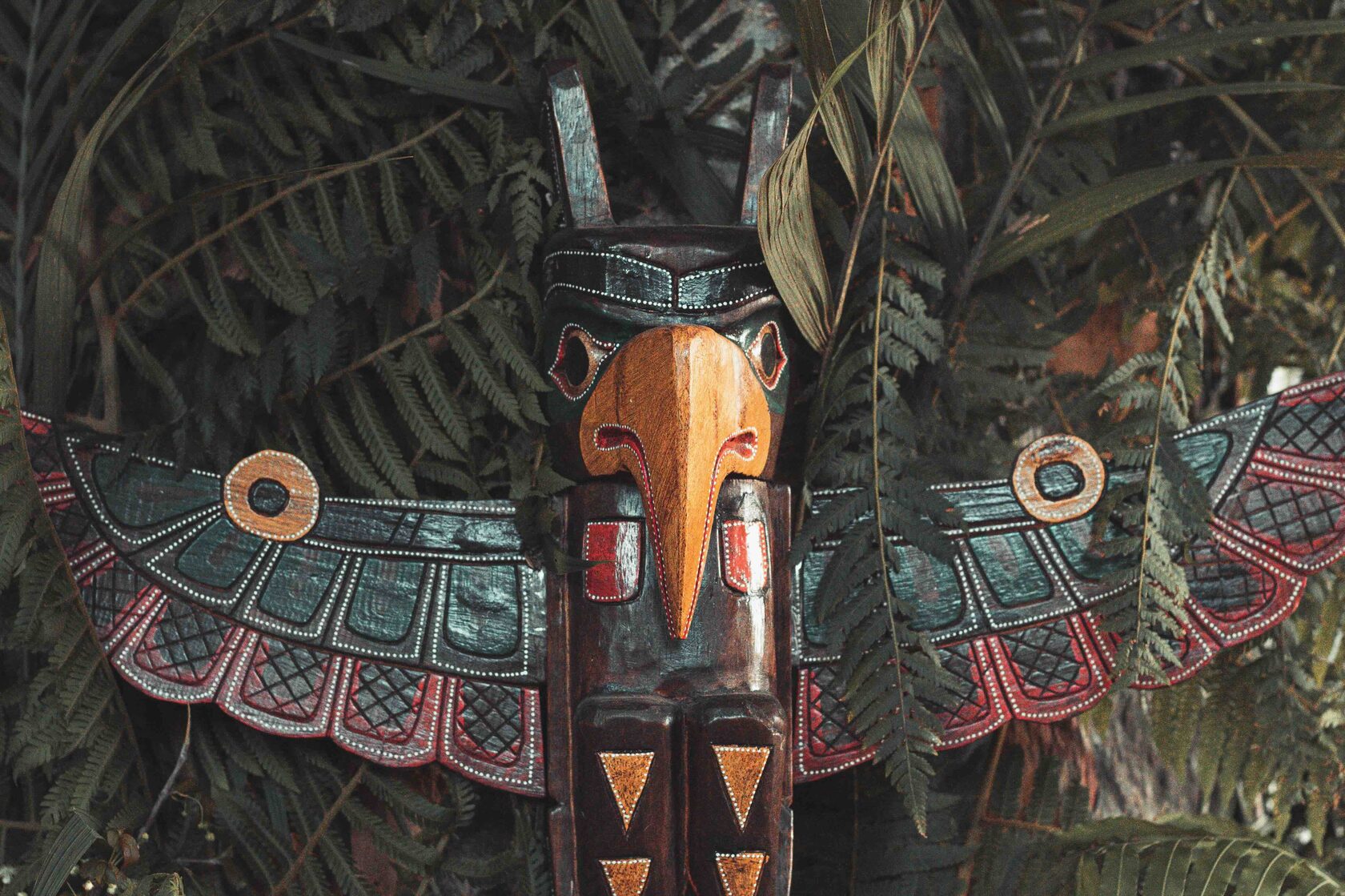
“Specific examples highlighted included: smudging, drum circles, feasts, vision quests and sweat lodges, as well as gathering/storytelling.”
“Importantly, approaches that consider the mind, body, soul and spirit together, are central to Indigenous healing and wellness.”
This is what I see here: they look at a psychologically wounded individual in a holistic way through the connection of
- the mind,
- the body,
- SOUL – individual being, and
- SPIRIT – the part that relates to the divine TOGETHER!
They consider the uniqueness of each community where the individual comes from, and allow them to go into the healing in alignment with their community, belief system, and customs. So, they allow for an INDIVIDUAL approach to healing, which likely includes the form of it, the pace of it, and the choice of the parties involved.
One more important part I pick up from there is – it is about rebuilding the connections and relationships through storytelling, and shared MEANING.
The Indigenous Communities look at healing not through the elimination of symptoms, but:
- Holistically – Are you whole?
- Considering individual uniqueness – Are you getting what you need here? Does the process align with who you are?
- Through relationships – Are you rebuilding the net of your relationships in a healthy way? You are a part of a larger whole, and we are reconnecting you through ties and bonds back into that larger whole.
This holistic process leads to a crucial question: what, at its core, is actually being repaired?
4. Thoughts on WHAT Gets Broken in Trauma
This train of thought has arrived at one interesting point for me:
HEALING FROM TRAUMA = RESTORATION OF MEANING
What if meaning is the opposite of trauma?
What if when we restore meaning, we heal trauma?
It’s just that meaning has to be restored:
- At multiple levels (holistically at mind/body/soul/spirit level);
- Slowly and individually ( a unique individually tailored approach to the healing process);
- Within the larger system of meaning with other family and community members.
If healing is the restoration of meaning after it has been shattered, then prevention must be the fortification of meaning before it is tested. This leads to a fundamental question:
If we could use this framework for the AFTERMATH of wartime and trauma, could we use it BEFORE humans are supposed to face potentially traumatic events?
What if we could build up resilience in souls, so that the structures of meaning DON’T GET DISMANTLED and don’t lead to psychological collapse and trauma?
I don’t have answers yet, but I will.